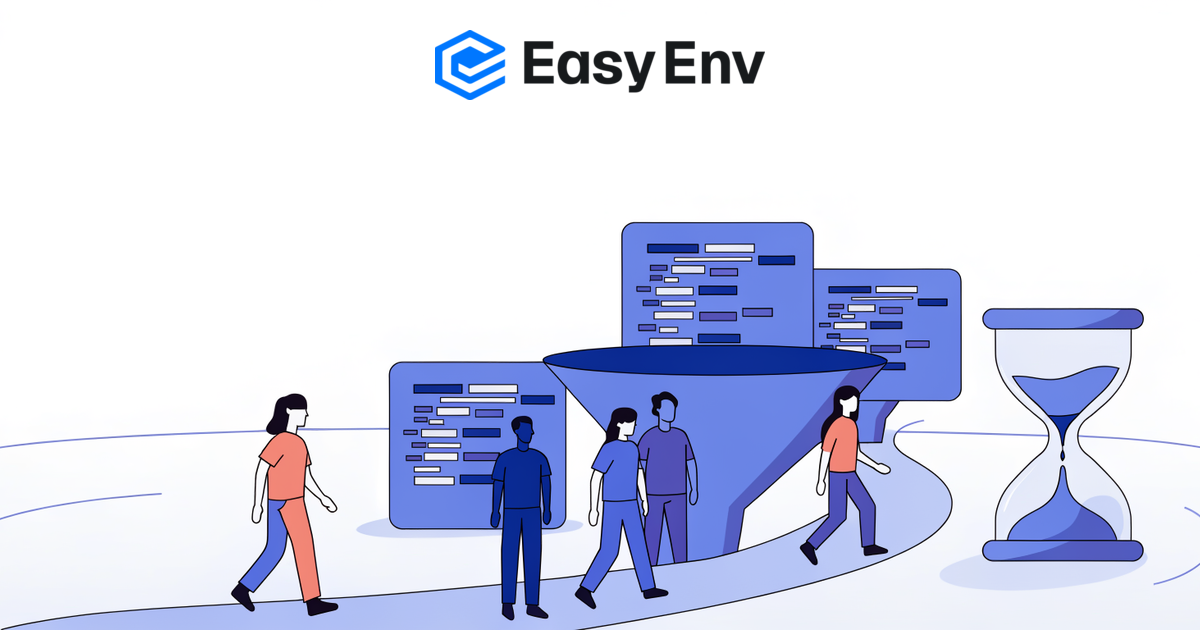
The candidates you least want to lose are the ones most likely to walk. A strong senior engineer is interviewing at four places, has a current job, and has no patience for a process that treats their time as free. The mediocre candidate with no other offers will tolerate your five-round marathon. The one you actually want will not.
So the shape of your process is quietly selecting against your best applicants. Every extra round, every unexplained delay, every unpaid weekend take-home is a filter that removes the people with options first. Here is where it happens and what to do about it.
Where good candidates actually drop off
From the funnels we see, the leaks cluster in a few predictable places:
- The multi-round gauntlet. Four or five separate sessions, each requiring the candidate to book time, context-switch, and often take PTO. Each additional round is another chance for a competing offer to close first.
- The unpaid, unbounded take-home. A "quick" take-home that really costs a full weekend, especially when the candidate suspects nobody will read it closely. Strong candidates with options simply decline.
- The silent gap. A week of no response after a good conversation. The candidate assumes rejection or disinterest and re-engages with a company that moved faster.
- The redundant re-testing. Being asked to prove the same basic competence three times, in three formats, signals that the process does not trust its own signals. That reads as disorganized, and organized companies win the good ones.
- The pointless whiteboard. A brainteaser or algorithm puzzle that has nothing to do with the job tells a senior candidate you do not know how to evaluate them. We wrote about the alternative in hiring without whiteboards.
None of these filter for skill. They filter for desperation and free time, which is the opposite of what you want.
The fix is fewer, better signals, not more rounds
The instinct when a hire goes wrong is to add another round. That makes the funnel worse. The better move is to get more signal per hour of the candidate's time, so you need fewer rounds.
One well-designed, real-environment session can replace several shallow ones. If you watch a candidate work in a real environment on a task that looks like the job, you learn more in 45 minutes than three separate algorithm rounds tell you, because you are seeing the actual behaviors that predict performance, not proxies for them.
That is not just kinder. It is a competitive advantage. When your process is one focused session plus a decision, and your competitor's is five rounds over three weeks, you close the candidate before they finish your competitor's second round.
Practical changes that keep the good ones
- Cut redundant rounds. If two interviews measure the same thing, delete one. Ask what each stage uniquely tells you; if the answer is "nothing new," it is a leak, not a safeguard.
- Bound and respect the take-home. Cap it at a couple of hours, tell them the cap, and make sure a human actually reviews it. Better, replace it with a live session so nobody spends a weekend on spec. (See take-home challenges worth a Saturday.)
- Compress the timeline. Speed is a feature. The company that decides in days beats the one that decides in weeks, for the same candidate.
- Make the task feel like the job. Candidates tolerate effort that is obviously relevant. They resent effort that feels like a hazing ritual. A real-environment task reads as respectful because it is clearly about the work.
- Communicate proactively. A one-line "we are still interested, next step is Thursday" prevents most silent-gap drop-off at near-zero cost.
Why the environment matters
Part of what makes candidates drop out is the sense that the process is theater: performing on a whiteboard, submitting a take-home into a void. A real-environment session flips that. The candidate is doing recognizable work, which feels fair, and because the session is recorded and reviewable, you need fewer confirmatory rounds. EasyEnv exists to make that single high-signal session possible, so the process can be both shorter for the candidate and more informative for you.
The candidate experience and the quality of your signal are not a tradeoff. The same change (one real, respectful, high-signal session) improves both.
The takeaway
Your best candidates have options, so they leave first when the process is long, redundant, or disrespectful of their time. Fewer rounds with more signal each keeps them in.
Design the funnel for the candidate you most want to hire, not the one with nowhere else to go.